
Alpharetta Address History by Era
No single roll names every person who lived at an Alpharetta property. The parcel card and deed chain identify owners. Reverse directories and census schedules can identify listed occupants. Permits date work, while plats preserve lot lines and legal descriptions. Start with the row that covers the target year, then seek a second record that answers a different part of the question.
| Historical source | Years represented | Custodian or shelf | Evidence supplied |
|---|---|---|---|
| Central web deed index | Central page says 1990-present; exact Fulton date varies | GSCCCA and Fulton Clerk | Parties, recording, book/page, legal description |
| Older deed books and indexes | Fulton deed room says early 1800s-present | Fulton Clerk deed room and microfilm | Ownership chain before the web run |
| Haines Criss-Cross | 1946-2016/17 | Fulton Library Special Collections | Listed occupant or phone by address |
| City and suburban directories | 1859/60-1991; suburban set 1953-1986 | Fulton Library Special Collections | Name, occupation, spouse, and address where covered |
| Federal census | Released schedules through 1950 | NARA and library databases | Household on the census date |
| Alpharetta permits | Electronic start not confirmed | Community Development or records request | Work, applicant, contractor, and inspection dates |
The timeline overlaps on purpose. A deed may show a buyer while a directory shows a different listed occupant. That is not a flaw. It may reflect a relative, a renter, an entity owner, delayed publication, or a tax mailing address elsewhere. State only what each dated record supports.
Start Alpharetta Previous Residents Locally
Begin with the Fulton County property search. Search the exact address and copy the parcel ID, situs address, current owner spelling, owner mailing address, subdivision, lot, sale data, and any deed reference. “Situs” means the parcel's physical location. The mailing address is where tax notices go. Matching addresses may support owner occupancy, but neither field names every person in the home.
Next confirm the parcel in the Fulton Property Map Viewer. Alpharetta postal wording is not proof that the site is inside city limits. A north Fulton address may use a familiar city label while lying in Milton, Johns Creek, Roswell, or another jurisdiction. The map and parcel record settle which local office should hold a permit or planning file.
Capture the full parcel identifier and legal lot description. They often remain useful when a road shifts, a number changes, or a modern ZIP cannot be projected into the past.
Walk Fulton Deeds Backward
The Fulton County Clerk of Superior and Magistrate Courts is the recorder. Its real-estate records are indexed through the Georgia Superior Court Clerks' Cooperative Authority. A backward search turns each seller into the next person to investigate. Use dates and the legal description to avoid joining deeds from two namesakes.
- Copy the current owner, parcel ID, latest sale, and deed reference from the assessor record.
- Find the acquisition deed in the GSCCCA Real Estate Index. Record the county, parties, instrument, date, book/page, and legal description.
- Treat the seller, called the grantor, as the preceding owner. Search that name as an earlier buyer, called the grantee.
- Match the subdivision, lot, legal description, and cross-references before adding a deed to the same chain.
- When online coverage ends, continue at the Fulton deed room or a free clerk-office GSCCCA terminal using bound or microfilmed grantor and grantee indexes.
- Grantor
- The party transferring an interest, commonly the seller in a deed.
- Grantee
- The party receiving an interest, commonly the buyer.
- Chain of title
- The linked series of recorded transfers for the same property.
- Legal description
- The deed's formal description, often by subdivision, lot, block, or boundary, which is more stable than a street label.
The GSCCCA central page describes a 1990-present name-index span, while statewide guaranteed standardization begins January 1, 1999. Do not claim every Fulton deed is online from either date without reading the live county “good from” value.
Online Index and Fulton Deed Room
A limited GSCCCA account can search summary data without document images. The documented single-use option costs $5 for four consecutive hours, with printing at $0.50 per page. Regular subscriptions support ongoing image work. Free public terminals at clerks' offices are the practical fallback when an image is gated or an early record is absent online. The clerk's official copy remains authoritative.
The official real-estate index overview shown below explains the system and its coverage.
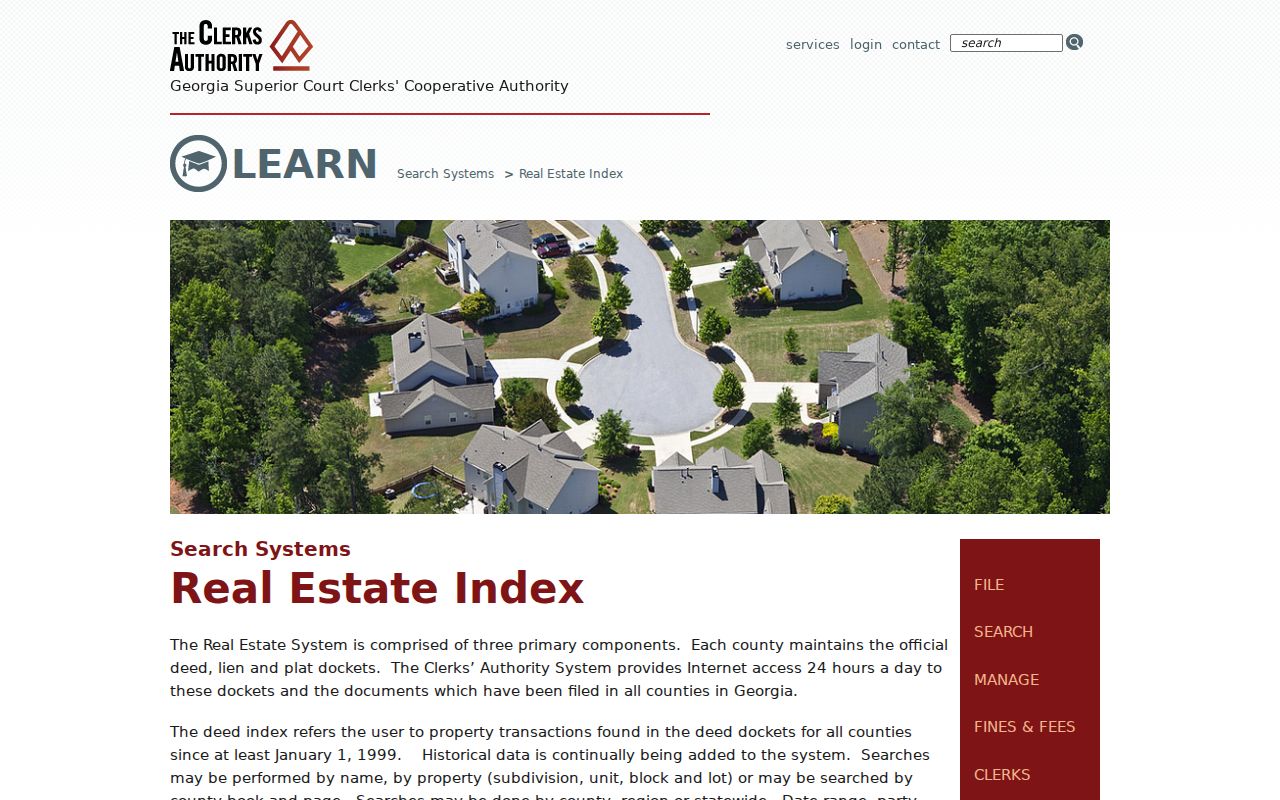
Use the overview to choose a name, book-and-page, property, or PT-61 route, then carry the exact citation into the next search.
The account and image-access page is shown in this GSCCCA service description.
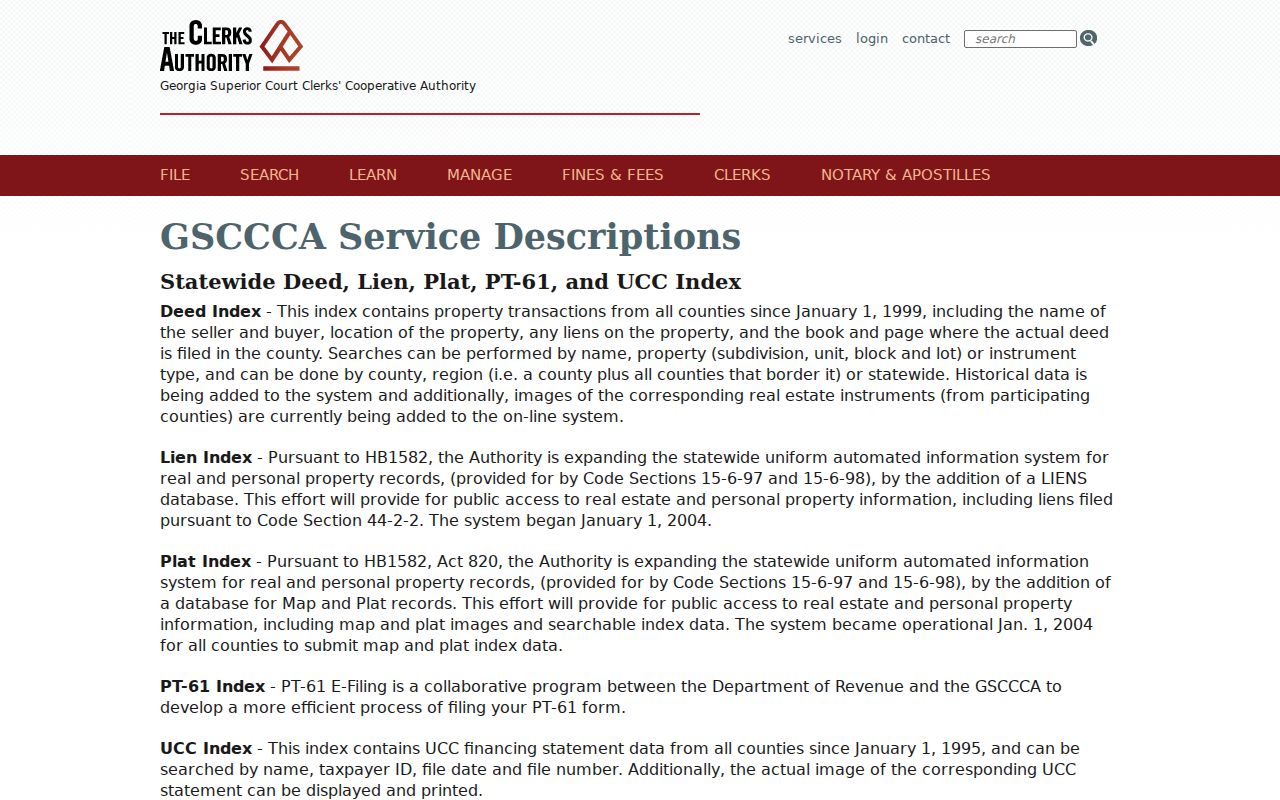
When an online account does not meet the need, call or visit the Fulton Clerk rather than guessing from an index snippet.
Old Milton Changes Alpharetta Searches
Fulton County was formed in 1853, but Alpharetta's older trail can also pass through historic Milton County. Milton was created in 1857, Alpharetta became its county seat in 1858, and the merger into Fulton took effect January 1, 1932. A record citation, newspaper, or family file from before the merger may therefore use Milton rather than Fulton.
Search both county names in catalogs and finding aids. Keep the deed's legal description as the stable thread. Modern development, annexation, road changes, and subdivision work can alter the surface address while the lot or recorded cross-reference still connects two eras. Fulton Library's directories can also document street-name changes.
Key point. Parcel and legal-description continuity is safer than pushing today's Alpharetta street number or postal city backward into every older source.
Match Alpharetta Directories to Census
Ownership is only one layer of previous-resident research. Fulton Library Special Collections holds Haines address-first books from 1946 through 2016-17, city directories from 1859/60 through 1991, and suburban volumes from 1953-1986. The full shelf and entry conventions belong on the Alpharetta city directory page; for a house trail, use only the years closest to a known ownership interval.
- Open the nearest Haines year and read the house number in street order.
- Check the alphabetic directory for the same name, spouse, occupation, and full address.
- Repeat in later and earlier volumes to bracket when a listing changed.
- For 1950 and earlier, compare the name, address, ages, and household members with the released census schedule.
- Use a deed to test ownership and a probate or obituary record to explain a death or family transfer.
A directory disappearance can mean a move, death, nonlisting, changed coverage, or publication gap. The census is also a dated snapshot, not a year-round roster. Record the evidence and leave the cause open until another source supports it.
Alpharetta Permits Date the Building
Once the parcel chain is known, city planning, permit, and code files can date the physical structure. Ask Alpharetta Community Development for applications, issued permits, inspection history, certificates of occupancy, planning cases, zoning applications, variances, and code orders by exact address. The city's ePlan system is mainly for submission and review, so it should not be treated as a complete anonymous history index.
A permit may name the owner, contractor, architect, applicant, or project contact. Those roles document work, not residence. Recorded plats from the Clerk or GSCCCA can show subdivision, lot, block, streets, and easements. Where a house number changed, request address-assignment files, plats, and street-name ordinances, then bridge the records with the parcel and legal description.
Note: No official source confirmed a citywide Alpharetta renumbering year or specific local Sanborn map years, so neither should be inferred from Atlanta material.
Close an Alpharetta Resident Trail
When an owner dies, Fulton Probate Court files may identify an estate, personal representative, heirs named in public filings, or a transfer out of the estate. Obituaries can connect relatives and earlier places, but survivors' current addresses should not be inferred or republished. Search newspapers through Fulton Library databases, Georgia Historic Newspapers, or the Old Milton archive, and cite title, date, and page.
Federal records may help in a narrow case. The Northern District of Georgia covers Fulton County, and its court site routes official information. The following captured view comes from that source.
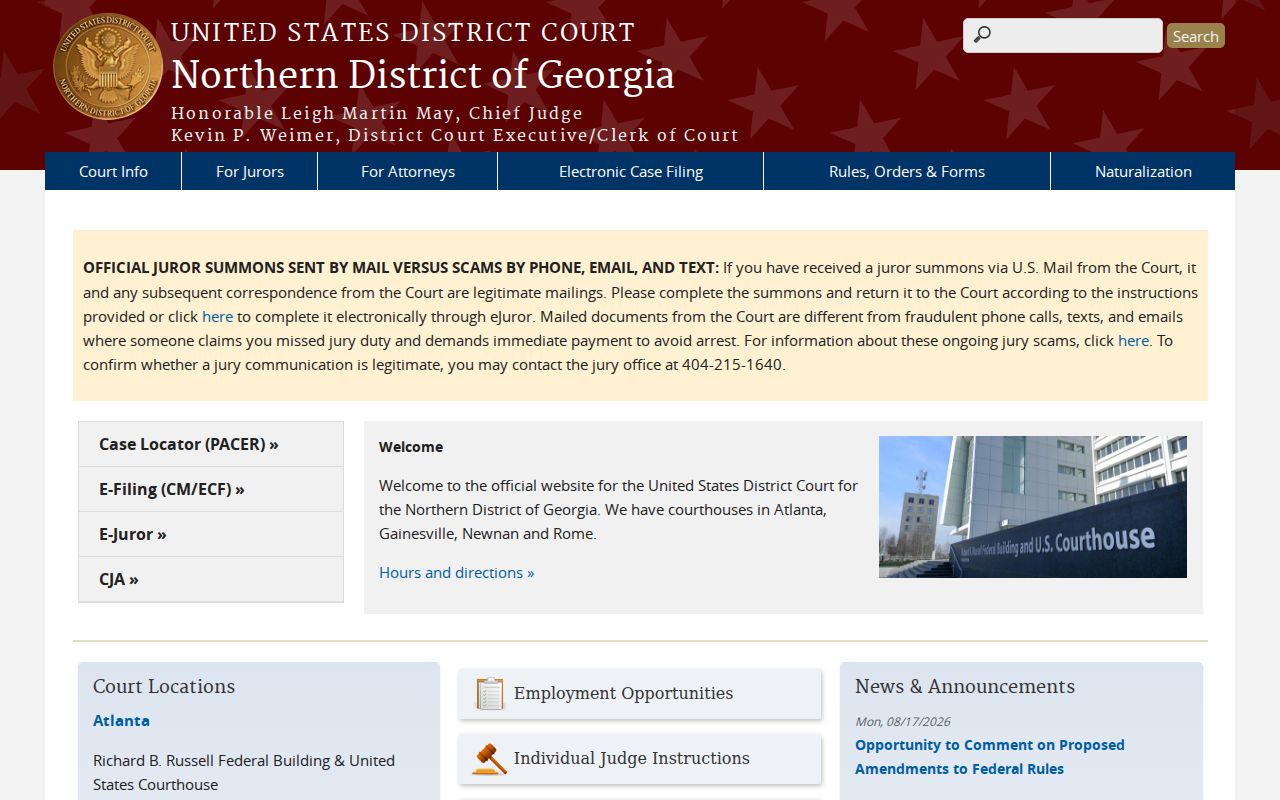
A federal case is only a possible supporting lead. It does not replace the Fulton deed, directory entry, or probate file that ties a person to the property.
Use Previous Residents Records Lawfully
House history, family research, estate work, and personal curiosity are sound reasons to follow an old address. Keep living people's privacy in view. Utility and alarm customer data may be withheld, vehicle addresses are protected, and Georgia's Safe at Home program protects qualifying participants. A public parcel owner is not a complete household roster.
Georgia's Open Records Act provides a fallback when Alpharetta or Fulton holds a file that is not in a portal. Send a narrow written request to the true custodian with the address, record type, department, and date range. The office generally must respond within three business days with records, a legal basis for withholding, or a time and cost estimate. It need not create a new previous-residents list.
Lawful use. Use Alpharetta previous-resident records for a legitimate personal purpose. Never use a historical trail to stalk, harass, threaten, or expose a living person.