
Sources for Alpharetta Neighbors
No official source lists every person on an Alpharetta block. Public map and tax records identify land and owners. A plat defines legal lots. Election records can show only the fields and geographic products that Georgia law permits. Printed criss-cross directories preserve past listed occupants, while city and neighborhood groups publish organization contacts rather than private member rolls.
| Block source | What it shows nearby | How to reach it |
|---|---|---|
| Fulton GIS | Touching and facing parcels, streets, and map layers | Free map browse and parcel click |
| Fulton assessor cards | Owner name, situs, mailing address, subdivision, lot, and block | Free search, one parcel at a time |
| Recorded plat | Formal lots, blocks, streets, and easements | GSCCCA index or Fulton Clerk |
| Voter file | Only releasable fields for an offered geography | Written Elections order; MVP is not browseable |
| Haines directory | Historically listed names and telephone entries by address | Fulton Library Special Collections walk-in |
| Community source | Public organization contact, meetings, and events | City or group page; member roster usually private |
A parcel card proves the named owner in a tax digest. It does not prove who sleeps there now. Matching situs and mailing addresses, plus a homestead indicator, can support owner occupancy, but still cannot identify every household member. A different mailing address may belong to an owner who lives elsewhere or to an entity.
Map an Alpharetta Neighbor Block
The immediate block begins at a known parcel, not at a guessed radius. Use the Fulton Property Map Viewer to search the subject address or parcel. Zoom until lot polygons and nearby street numbers are clear. Select the subject, then click each parcel that touches it and each parcel that faces it across the road. Save every parcel ID before opening its linked assessor card.
- Confirm the subject address and parcel. Check the municipal boundary because an Alpharetta mailing line may fall outside the city.
- Mark touching parcels first. Keep facing parcels in a separate group because visibility across a street is not legal adjacency.
- Open each assessor card. Record owner, situs, tax mailing address, neighborhood, subdivision, lot, and block exactly as shown.
- Use a recorded plat when the legal subdivision block matters. The plat settles lot lines and easements that an aerial view cannot.
- Label the final list as parcel owners, not residents. Add source dates so a later reader can recheck the work.
This compact flow is the heart of a neighbor search: address to parcel, parcel to adjacent polygons, polygons to assessor cards, and formal boundaries to the recorded plat. For a longer owner chain along the full road, use the Alpharetta street directory.
Select Alpharetta Neighbor Parcels
AlphaGIS adds city-specific selection controls. Its search field is labeled “Search Alpharetta…”. Results are grouped as Address Points, Tax Parcels, Places, and Streets. Tax Parcel results can supply the parcel identification number, address, owner, and links. Street results add functional class, maintaining authority, and left- and right-side number ranges.
| AlphaGIS control | Input or choice | Block-search use |
|---|---|---|
| Search Alpharetta… | Address, parcel, place, or street | Find the subject location |
| Selectable layers | Address Points, Places, Tax Parcels, Streets | Choose which mapped records enter the set |
| Selection mode | Extent, Point, Polyline, or Polygon | Draw the smallest useful block shape |
| Distance | Optional buffer in feet | Add a measured edge only when needed |
| Open Table | Selected result rows | Review parcels without calling them households |
| Map or Aerial | Base-map choice | Compare parcel lines with visible land context |
A point, line, polygon, or extent selection can make a parcel table around one address. Keep the shape small. Do not draw a broad ring of personal records around a protected person. Aerial imagery adds context, but the research notes that it may not print through the tool.
Owners Are Not All Neighbors
The most important limit is simple: a parcel owner is not automatically the occupant. A tax roll omits renters and other household members. An owner's mailing address may be an agent, office, post box, or another home. An exemption can support an owner-occupancy reading, but it is not a full household roster. A permit names applicants or contractors and dates work, not a move-in.
Use plain evidence labels. “Fulton assessor owner as of the current digest” is supportable. “Everyone who lives here” is not. This distinction protects accuracy and makes later updates easier when a deed, tax card, or map layer changes.
Note: Record the owner, situs, mailing address, source, and date as separate fields instead of blending them into one claim.
Define Alpharetta Blocks With Plats
A map can show which lots look close. A recorded plat shows the formal subdivision plan. It identifies lots, blocks, streets, and easements, and can resolve cases where a fence, shared drive, road curve, or large common tract makes visual adjacency unclear. Search the GSCCCA plat index with the subdivision, unit, block, or lot details taken from the assessor card.
If the online image is unavailable, use the Fulton Clerk's real-estate room or a free GSCCCA public terminal installed at a clerk's office. Index access and image access are not the same. The controlling filed plat remains with the clerk. That fallback is useful when a modern street address never appears in the old index.
- Parcel
- A mapped and assessed unit of land with its own identifier.
- Situs address
- The address where the parcel is physically located.
- Plat
- A recorded drawing of subdivision lots, blocks, streets, and easements.
- Facing parcel
- A lot across a road from the subject, visible nearby but not sharing a legal boundary.
Voter Data for Alpharetta Neighbors
Georgia My Voter Page is not a street or block directory. It requires a person's first initial, last name, county, and date of birth. Do not test nearby names or scrape it to build a roster. Under O.C.G.A. §21-2-225, elector lists are available for inspection or copy within legal limits, but the available geography and fields must come from Elections.
Ask Fulton Registration and Elections what current municipal, precinct, district, or other product can lawfully answer the block question. The order instructions can allow selections such as sex, age, race, and participation in one election or a combination of up to five. Participation never reveals a ballot choice, and Georgia has no party registration. Safe at Home records and protected identifiers are not available for exposure.
A written order, current fee quote, output choice, certification, and use acknowledgment may be required. Registration can also become inactive or cancelled through list-maintenance rules, so a record is dated evidence rather than proof of continuous residence.
Community Contacts Around Alpharetta
Alpharetta's community layer is made of public organization contacts, not private household books. No official citywide member directory was found. The city's Neighborhoods work includes outreach, public meetings, projects, and an HOA Registration route, but it does not publish members or offer a browseable association roster. HOA management or board contacts may be used only when the organization publishes them.
City neighborhood outreach
Use the city's published services and contacts for neighborhood projects, public meetings, and the correct department route.
HOA public contact
Use an authorized management or board contact. Treat member lists as private association records.
Historical society
The Alpharetta and Old Milton County Historical Society offers archive contacts, but no public member roster.
The captured Alpharetta services directory is a practical routing point for city help.
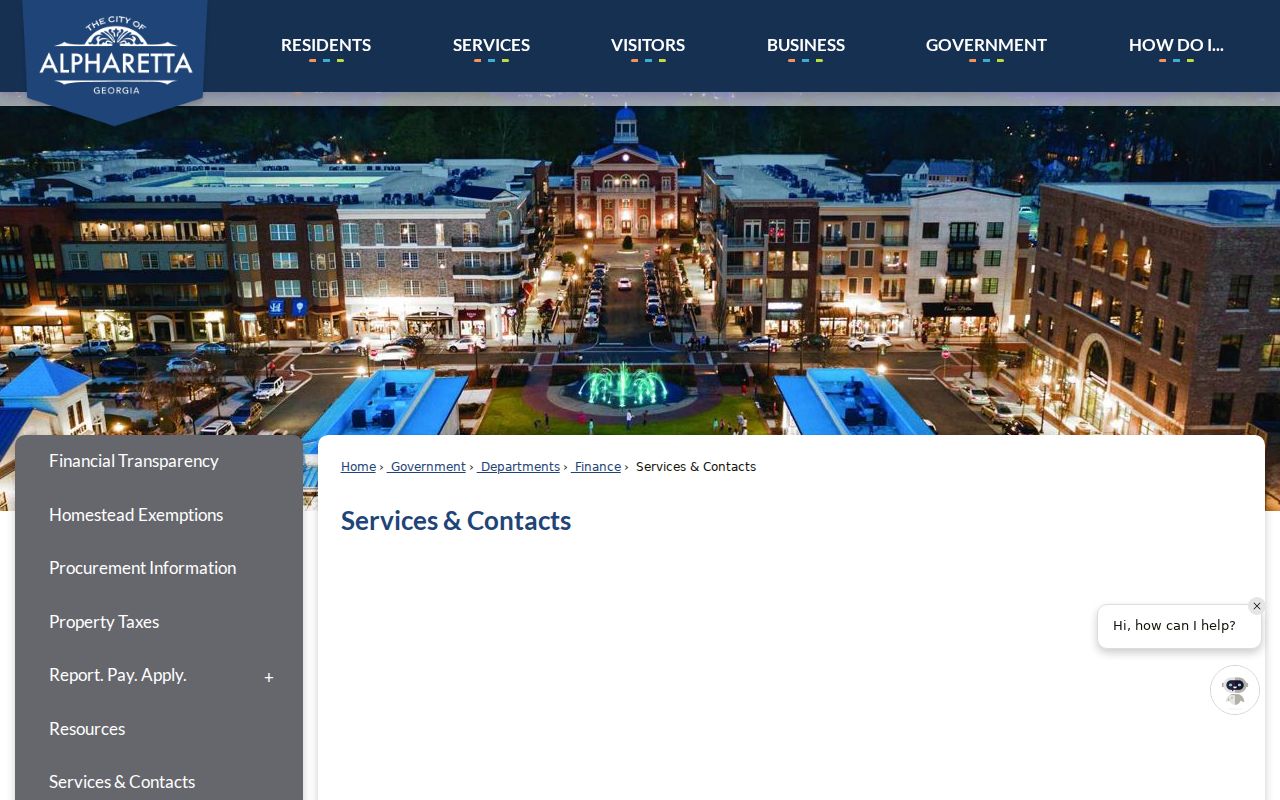
It helps locate a public office or service contact without turning private membership into a resident list.
Past Neighbors on Alpharetta Blocks
For a historic block, switch from current parcel tools to Fulton Library Special Collections. Haines criss-cross directories run from 1946 through 2016-2017 and arrange listed names or telephone entries by address. They can show the order of listed occupants down a road for a given directory year. Conventional city directories cover 1859-1860 through 1991, and suburban volumes from 1953 through 1986 are especially useful for north Fulton.
All volumes are available for walk-in use. Ask Library.Special Collections for holdings help when a road name changed or an address falls near a coverage edge. A directory listing is dated and selective. Nonlisted numbers and omitted households remain blind spots, so pair an old entry with a deed, census, probate file, or obituary before drawing a family-history conclusion.
Compare Alpharetta Neighbor Sources
Official rolls and commercial neighbor tools do different work. The official source states who keeps the data, what date it reflects, and how to correct a mistake. A commercial compilation may be quick, but it can combine namesakes, retain an old address, or hide its source date. Never treat a compiled household claim as stronger than the parcel, voter, court, or directory record it may have copied.
| Source type | Useful strength | Main caution |
|---|---|---|
| GIS and assessor | Defined parcel and named owner from the official digest | Not a complete list of occupants |
| Plat and deed | Formal boundary and recorded ownership event | May omit a modern street address |
| Lawful voter product | Dated registration fields within election law | Protected voters omitted; MVP cannot browse a block |
| Community organization | Authorized public contact and local event route | Private member roster is not public |
| Commercial compilation | Possible lead for another source | May be stale, merged, incomplete, or hard to correct |
Request Alpharetta Block Records
A city file may add a dated permit applicant, planning contact, or public neighborhood-project record. Use the Georgia Attorney General's Open Records Act instructions when no portal supplies it. Send a narrow written request to the actual custodian. Give the address, record type, department, and date range. The agency does not have to create a new neighbor list.
The custodian generally must answer within three business days. If production cannot happen at once, the reply should state what is available and estimate the time and cost. Protected fields should be redacted. Search and retrieval charges follow statutory limits, and the first 15 minutes are free.
The manifest-captured Georgia request guidance shows the official fallback.
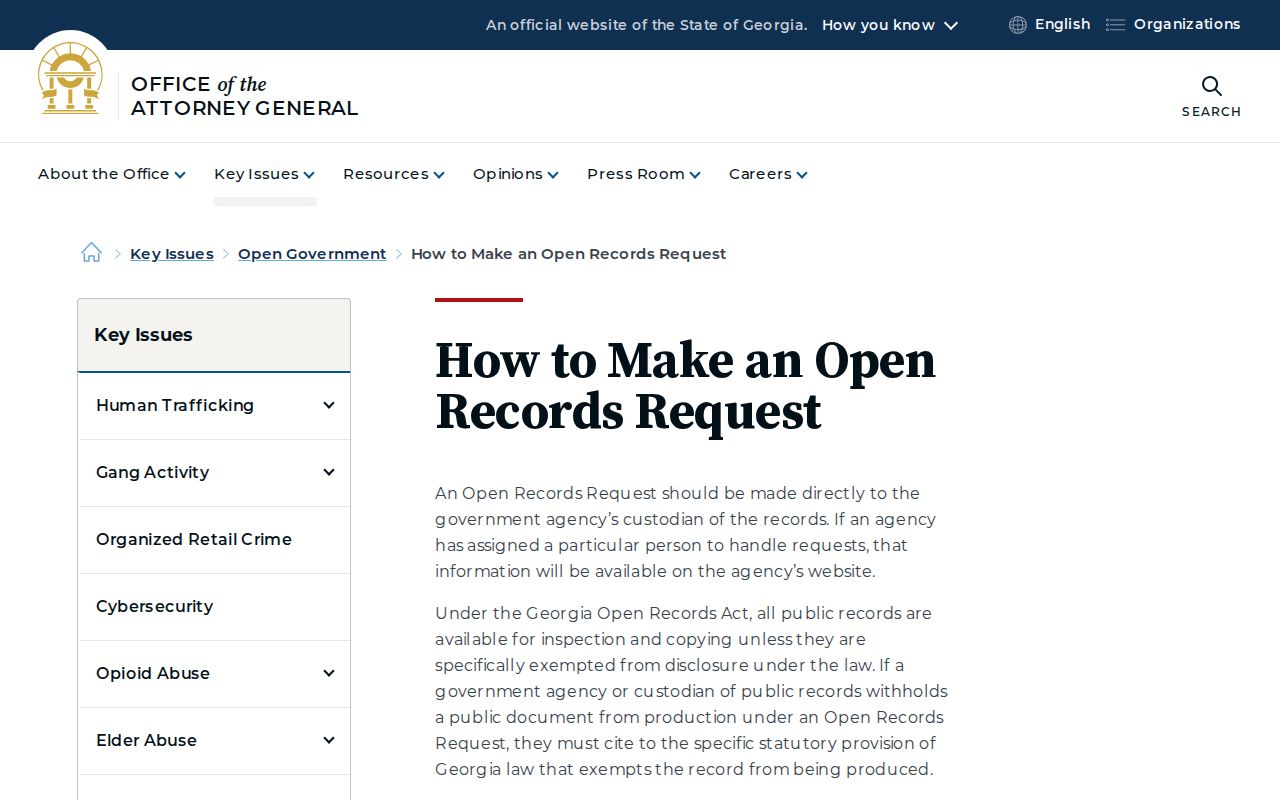
A specific request is more likely to return an existing file without inviting an unnecessary compilation.
Keep Alpharetta Leads in Context
Some state name searches provide a historical place lead without proving who lives on a block. Georgia's unclaimed-property program may show an owner name, reported address locality, reporting holder or category, and a claim route. Search and claiming through the state are free. A match can point to a former Alpharetta connection, but not to present occupancy or immediate adjacency.
The captured Georgia unclaimed-property program illustrates that narrow distinction.
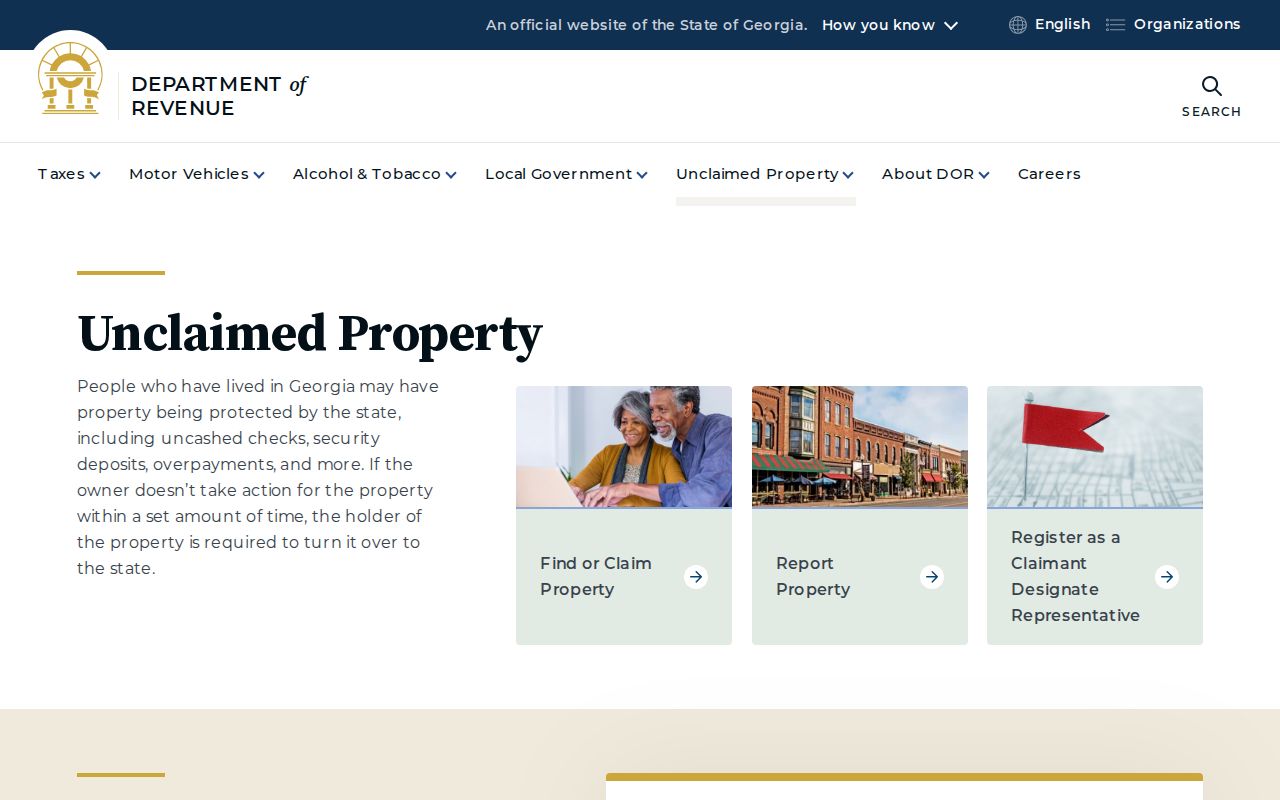
Take the reported locality back to a dated parcel, deed, directory, or probate source before connecting it to an Alpharetta block.
Privacy for Alpharetta Neighbors
Renters, children, and all members of a home are not enumerated in a general public roll. Utility, alarm, motor-vehicle, and delivery data cannot be treated as neighbor directories. The federal Driver's Privacy Protection Act restricts personal data from state motor-vehicle records. Georgia Safe at Home gives eligible survivors a substitute address and mail forwarding, and that protection must never be defeated by comparing sources.
Georgia's Open Records Act also shields Social Security numbers, financial and medical data, day and month of birth, and specified home contacts of public personnel. Public access does not authorize republication of sensitive details. Keep a block project to parcels, lawful public contacts, and clearly dated record facts.
Lawful use. Learn about Alpharetta neighbors for civic curiosity, reconnection, or personal safety. Never use records to watch, threaten, harass, or expose anyone.